The Tensegrity Principle as Energy Management
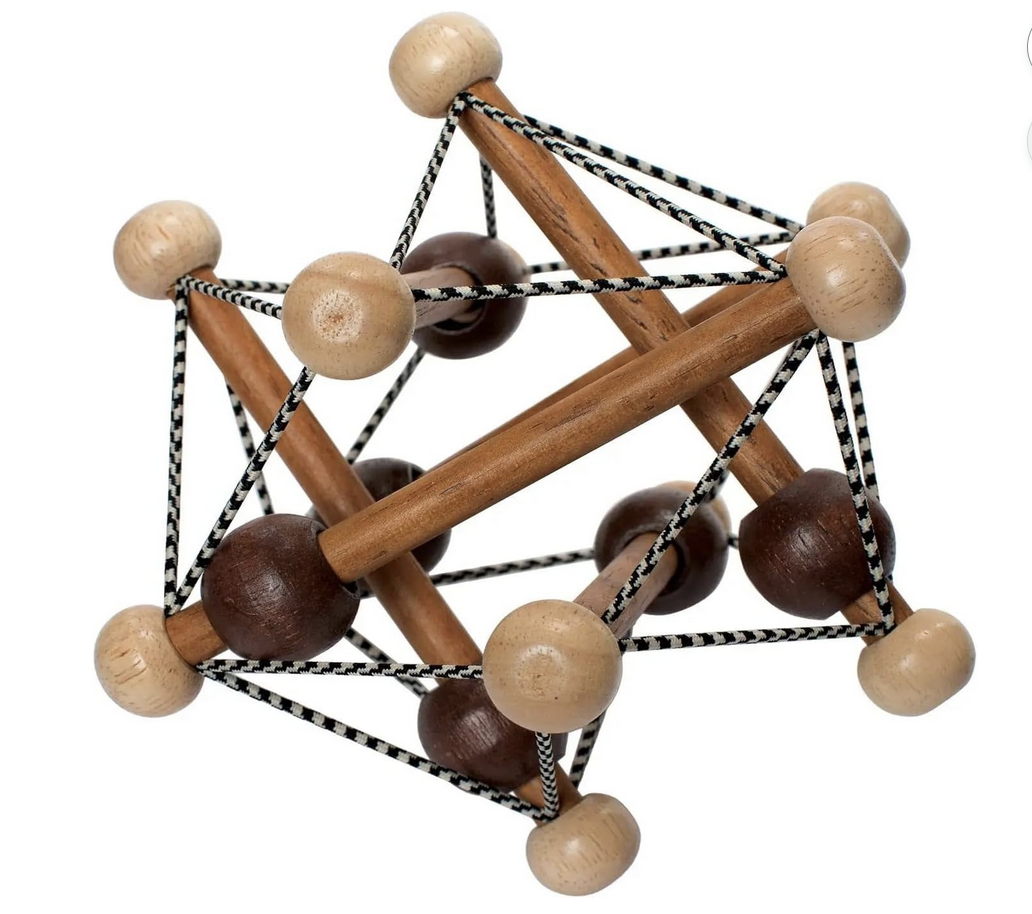
I was recently interviewed for the Journal of the Dr. Ida Rolf Institute about my experience taking a course on biotensegrity. The following is an excerpt from the interview that I thought could be an interesting blog post. Dorothy Miller has just asked me what had prompted me to take the class. I explained that I had done some research about biotensegrity some years ago for my book, Body Mandala, but didn’t go any farther with it at that time.
Mary: During the pandemic, I began watching the biotensegrity community’s ‘biotensegri-tea parties’ on YouTube. Listening to their conversations, I began to see that their inquiry and purpose are light years beyond what I had thought.
Dorothy: What do you mean?
Mary: Well, my understanding was that the tensegrity principle involves discontinuous compression elements suspended within a network of continuous tension. In that case, the wooden struts in your model are the bones, and the rubber bands are the soft tissues. If you pinch one of the rubber bands, it distorts the whole thing. On first acquaintance with this model, you think, okay, so it represents holism, adaptability, and continuity – so what?
Dorothy: That was how I thought of it. In my training at the Dr. Ida Rolf Institute®, the instructor brought in a wooden tensegrity toy to illustrate Buckminster Fuller’s ideas. The model shows how tension in one part of the body affects the whole. But there’s more to it, I guess.
Mary: The biotensegrity understanding of the model is dynamic, where those strings and struts represent the force vectors of tension and compression. And when the forces are balanced, the structure stiffens when it encounters an outside force. It’s impossible to see this if your model is constructed with rubber bands because placing a load on it makes the thing collapse. But you’ll clearly feel it if the model is made with a fishing line or strong string. Then the model demonstrates that stability can be achieved with minimum energy expenditure.
Dorothy: Then it’s a model of energy management?
Mary: Yes, and minimal energy expenditure is one of the basic principles of living things. Energy inefficient organisms don’t evolve. When a tensegrity structure takes on a load, it expands and becomes not only more spacious but also stronger. And it’s very light in weight relative to its strength. But when a compression structure, like a brick tower or a person with the conventional idea of good posture, encounters external load, extra energy must be recruited to sustain it. Either that or the structure begins to collapse.
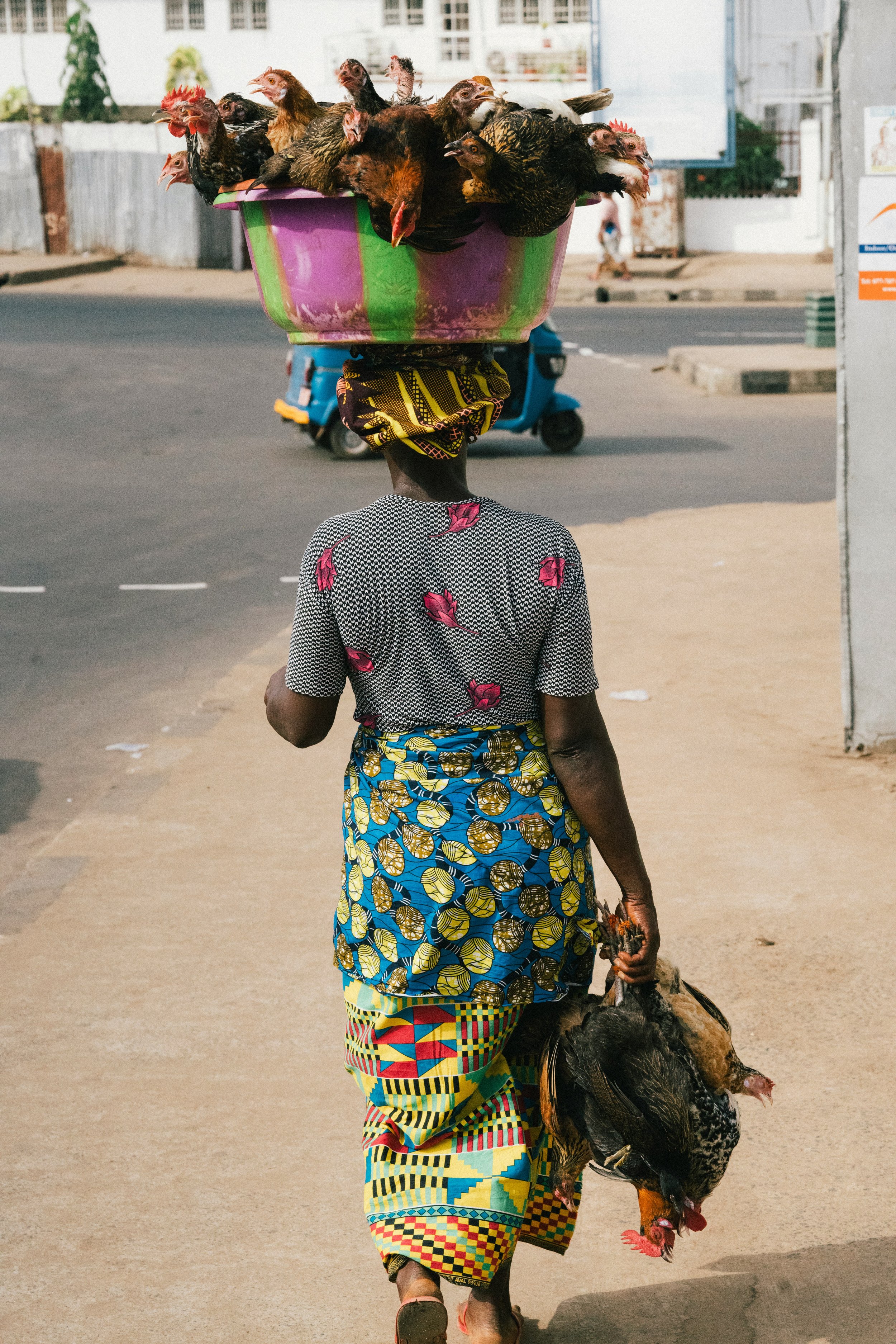
Dorothy: This reminds me of how people, typically in non-Western countries, can carry massive loads on their head, such as rocks, baskets of food, or buckets of water. The weight does not seem to be pushing them down into the earth. In fact, they move with a beautiful spiraling movement in their spine.
Mary: That’s a good example of how human tensegrity is a dynamic tension-compression system. This principle of balanced push and pull forces applies not only to whole organisms like people with the buckets on their heads, but also at every scale within the body, down to the subcellular level. You might picture dozens of animated tensegrity models nested one inside another, like those Russian dolls.
The ideas of Fuller and other developers of the tensegrity principle arise from what biology has been doing for billions of years. So the biotensegrity endeavor isn’t just about applying tensegrity to human structure and movement; it’s about showing that the tension-compression principle is the basis of all living things. The bio in biotensegrity distinguishes it from the purely structural application of the principle.
Dorothy: You’ve touched on some of these ideas in your Tensegrity-in-Motion group, and when I follow your cues, I experience inner spaciousness, support and ease. Is it the difference between having support from within as opposed to effort from the outside?
Mary: Yes. What you experience is your body’s expansional balance. I find that many of Dr. Rolf’s ideas dovetail with the topics discussed by the biotensegrity community.
© 2026 Mary Bond
Thanks for reading, and for sharing!