Patellafemoral Syndrome
/
Best of all, I’ve had fleeting moments of sensing something new and important about my stance in the world.
Read MoreBest of all, I’ve had fleeting moments of sensing something new and important about my stance in the world.
Read MoreFor this journey you need a theory, a map that tells you where you are with the client and keeps you from getting lost. And you need a portmanteau of techniques—exercises, meditations, experiments, explorations—ways to help your client become at ease with unfamiliar terrain of herself. In this post I’m sharing my map.
Read MoreA deeper level of somatic education can lead to lasting change in the way someone inhabits their body. This approach invites the client to become aware of their habitual movements and to explore sensations that stimulate new movement behaviors.
Read MoreThe highly mobile hip joints combined with plasticity between sacrum and ilia, offer the body a dynamic relationship between the spine and the ground.
Read MoreWide-ranging conversation about tensegrity, Rolf Movement®, and the principles of Rolfing Structural Integration.
Read MoreIt’s easy to distinguish the feeling of gratitude from that of disappointment. But how do the sensations of gratitude differ from those of happiness, love, or relief? Could I find a way to more fully embody my thanksgiving?
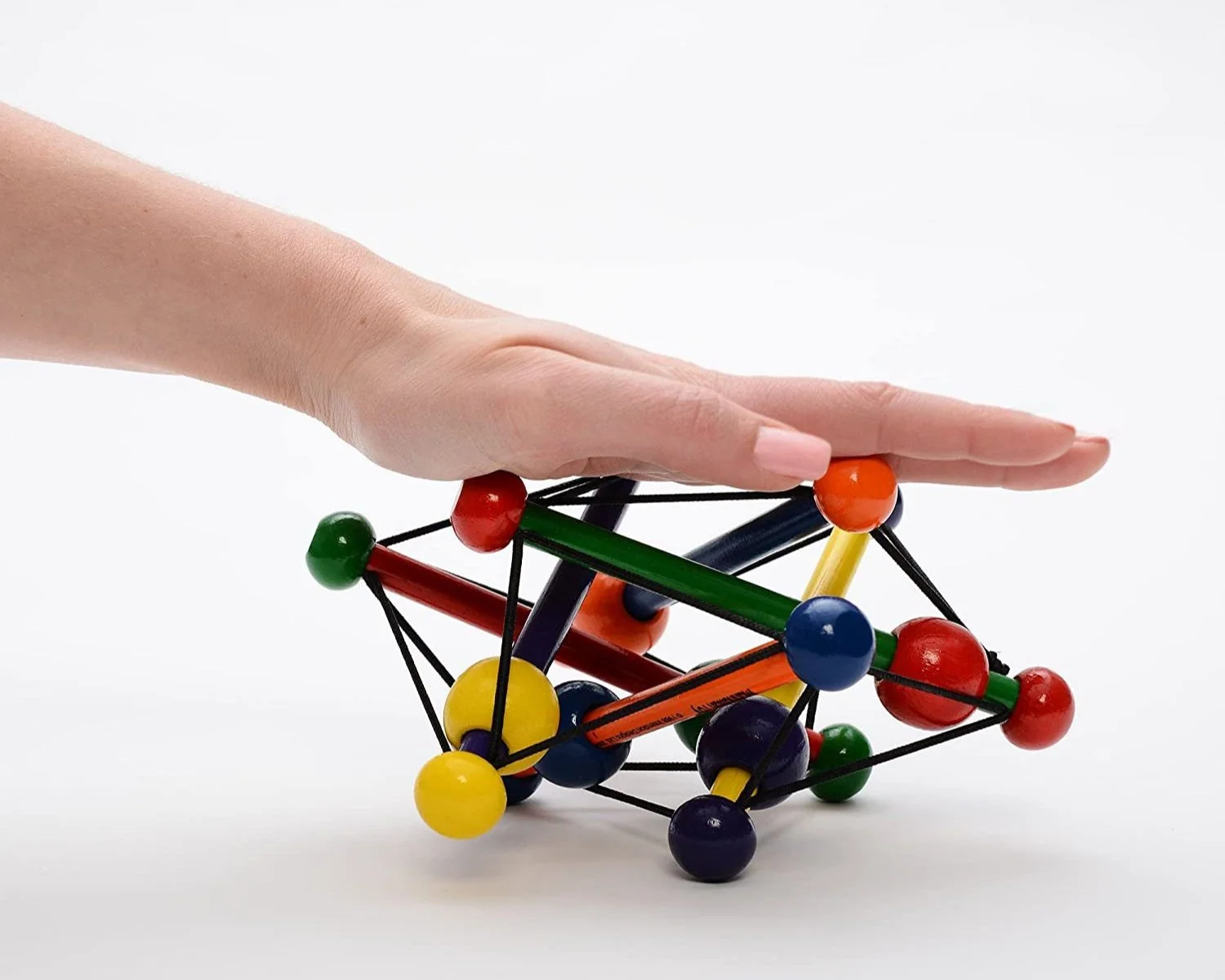
Read MoreYour “perceptual tensegrity” can improve your balance when you practice yoga. It can activate your core in Pilates. It can keep you from tripping when you walk down the street. Because awareness of space outside the body creates more space inside the body. One result is that your muscles are then arrayed to best advantage for efficient coordination.
Read MoreJaw tension can be an unrecognized source of upper neck stiffness and pain. This post suggests a way to release your jaw by meditating on your molars.
Read MoreNo two people with Parkinson’s Disease experience the same array of symptoms, but I think I can safely generalize that it’s no longer possible for any of us to take movement for granted.
Read MoreAn online presentation to my local Parkinson’s Disease support group. There’s information in it that’s useful for anyone, not just people living with PD.
Read MoreI had stumbled upon the basis for music therapy. The AirPods give me the experience of being inside the music which is different from just listening to it —although that’s helpful too
Read Morein reality, posture is dynamic. It’s a process of moving the body through time and space. Ideal posture is only a moment in time. At any given moment we must be perceptually oriented to the ground and to the spatial field surrounding us. That perceptual orientation allows us to feel secure enough in our environment to express ourselves in response to what we are facing.
Read MoreI take my time, resisting the urge to “fix” what I think should move more gracefully. If I stay within today’s comfort zone, movement gradually becomes freer without force.
Read MoreTwenty years ago I took a basic course with the Bodynamic Institute. What I like about this approach to body/mind correlation is that I can feel the reality of it in my body. Other groups’ formulations often feel more cerebral than physical.
Read More